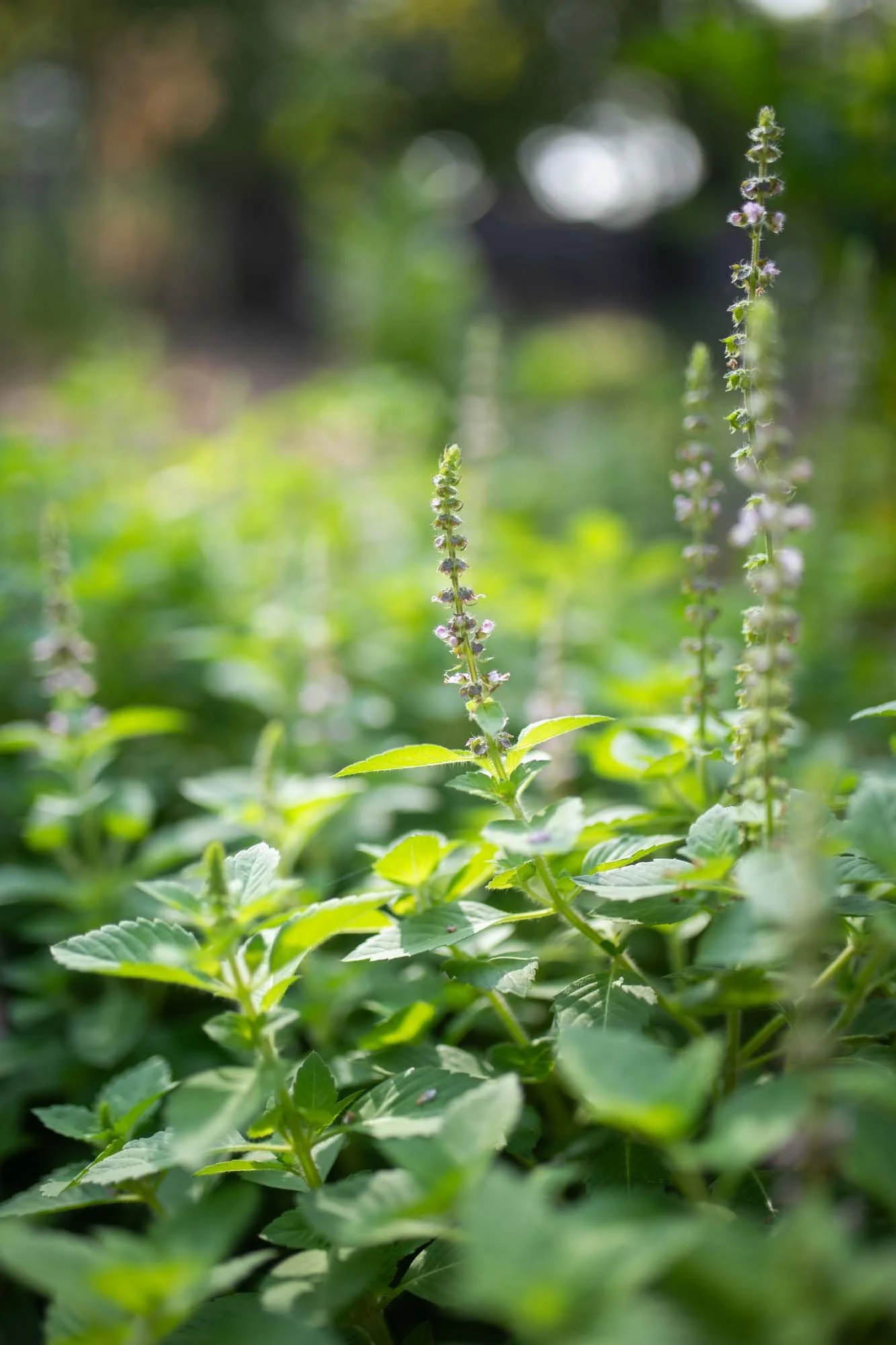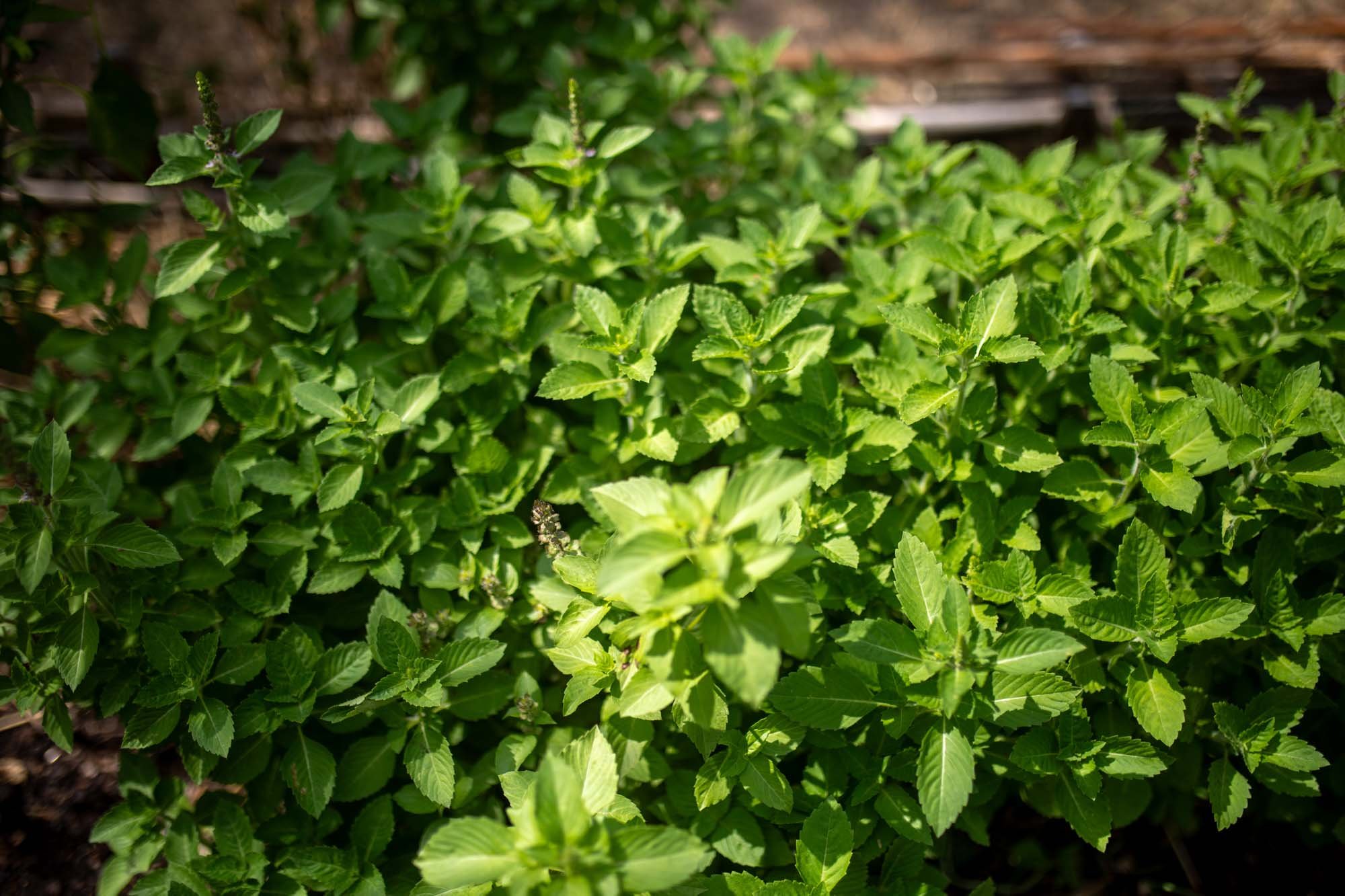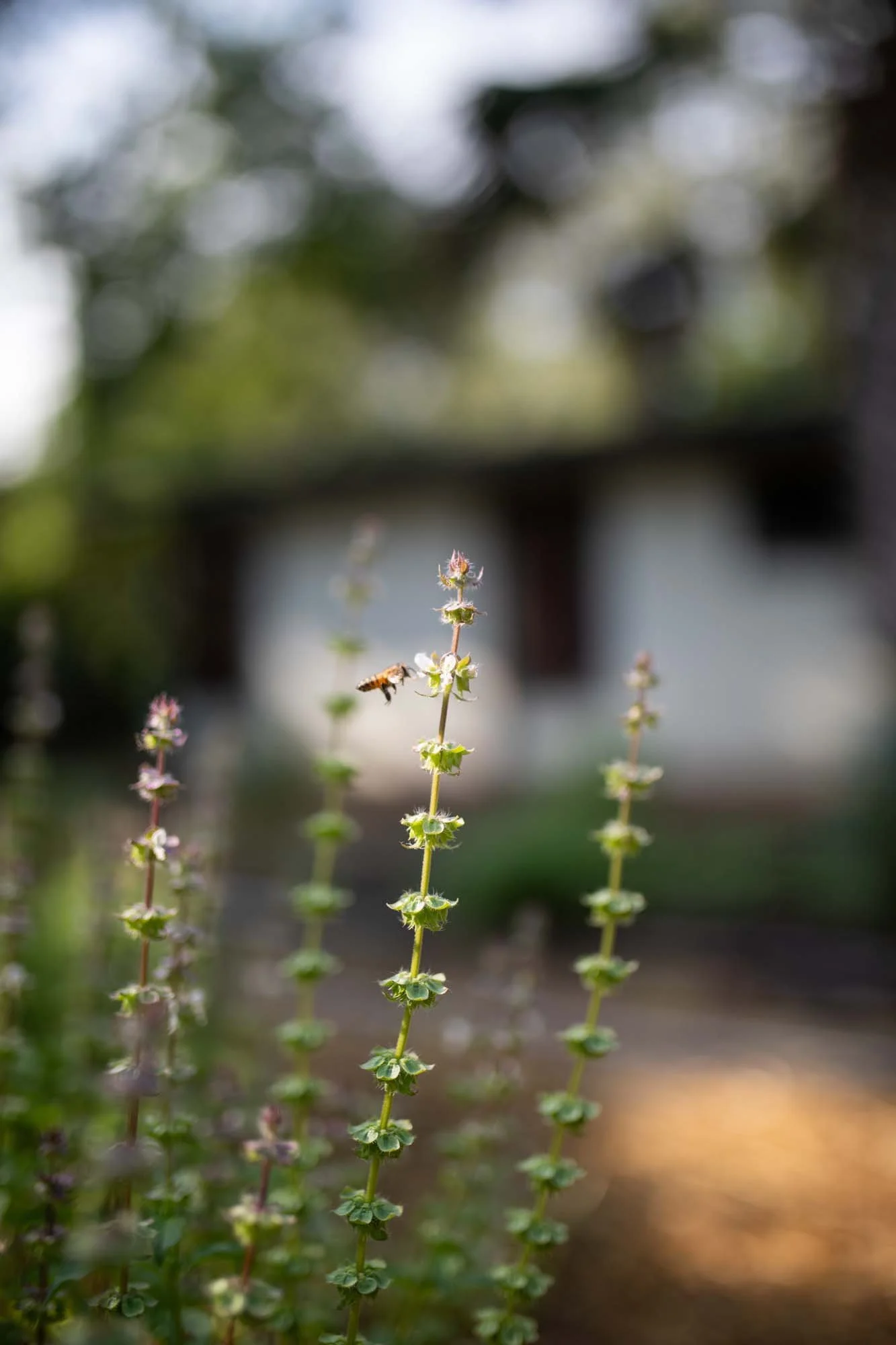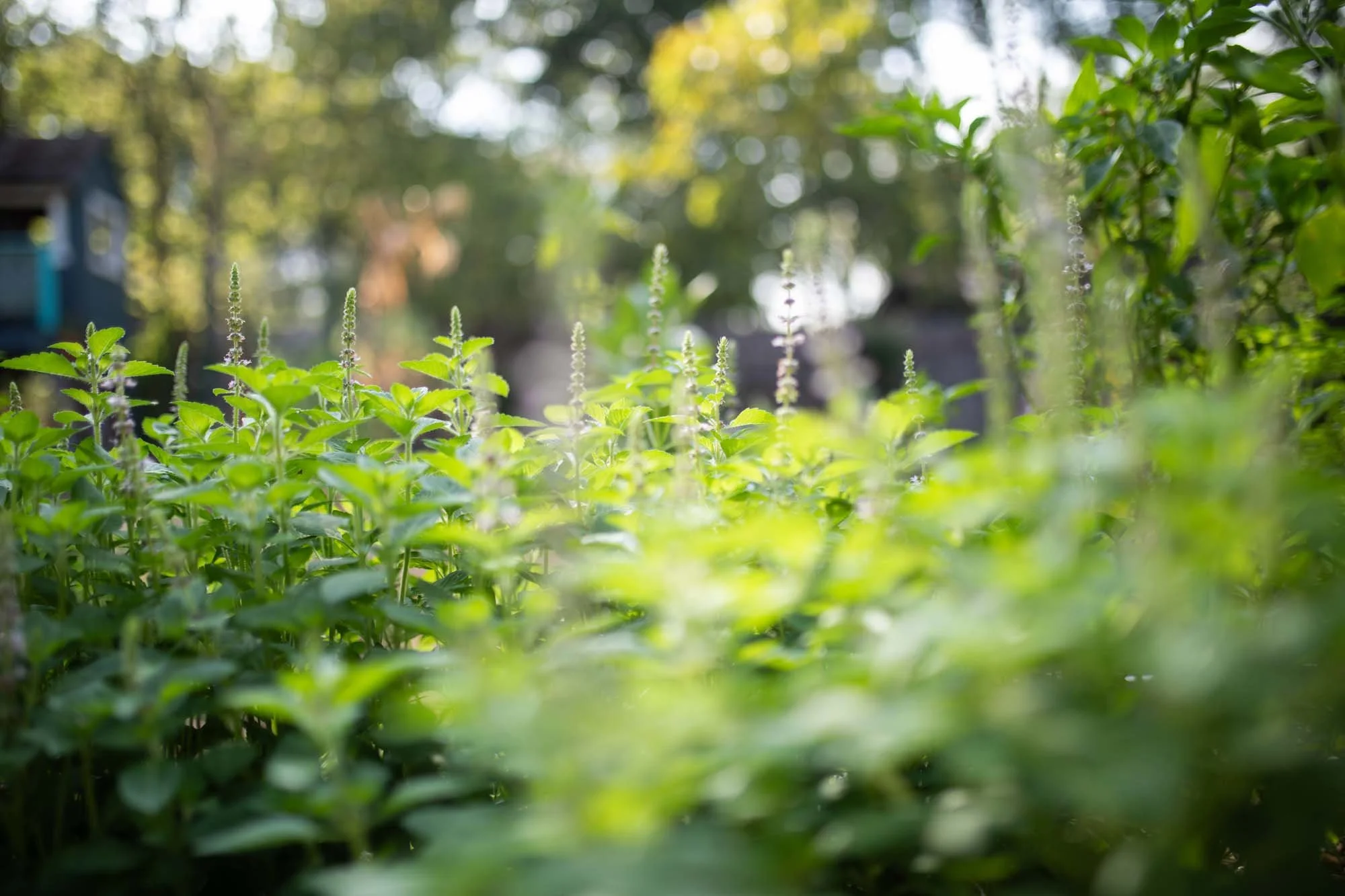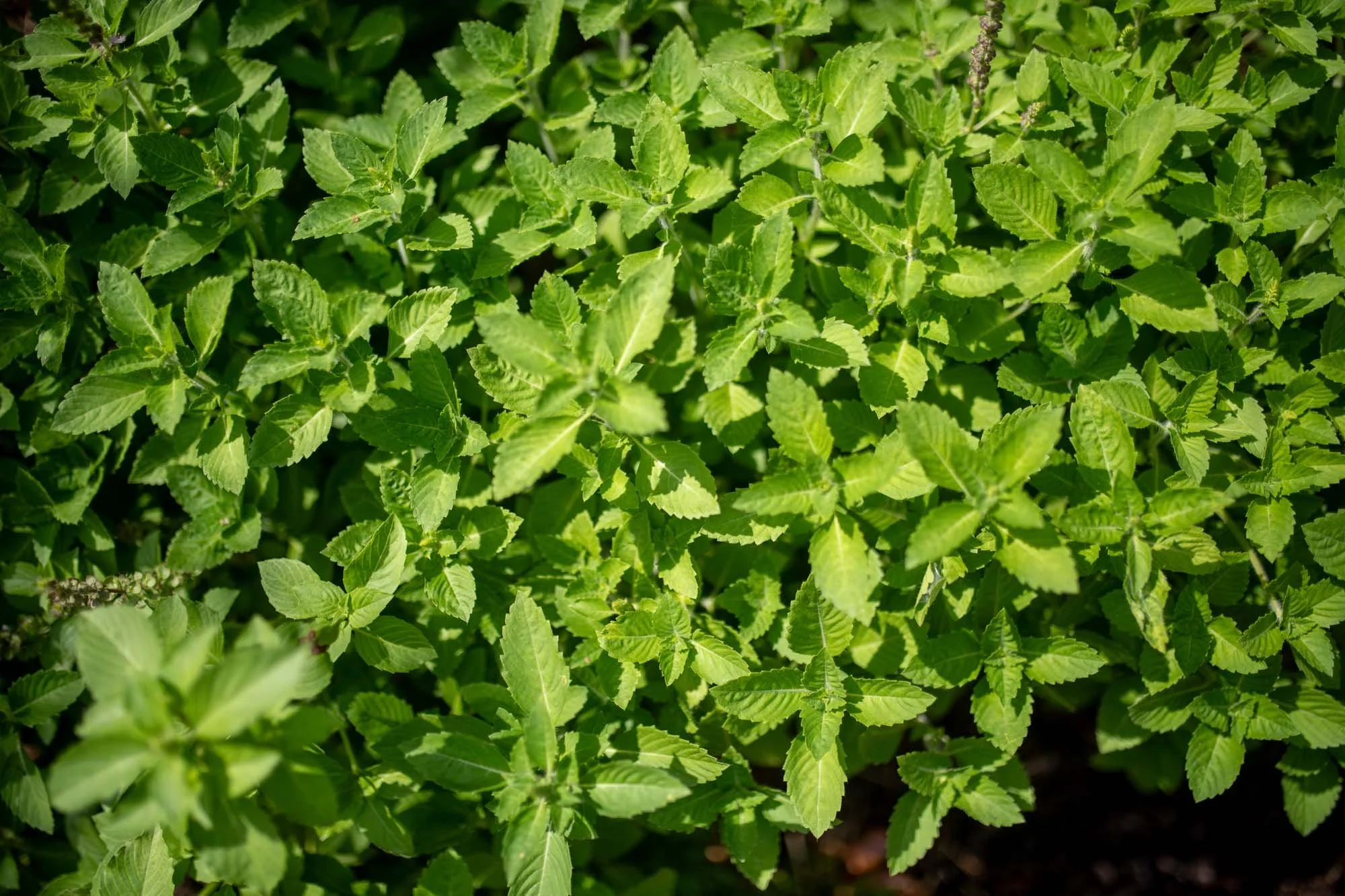
There are a few plants I will always have growing in my garden, and tulsi (aka Holy Basil) is one of them. This special member of the basil family sets itself apart with its strong floral aroma and spiritual significance. It is considered a sacred plant in Hinduism, and has long been used in traditional medicine for its ability to manage stress and support immune function and overall well-being.
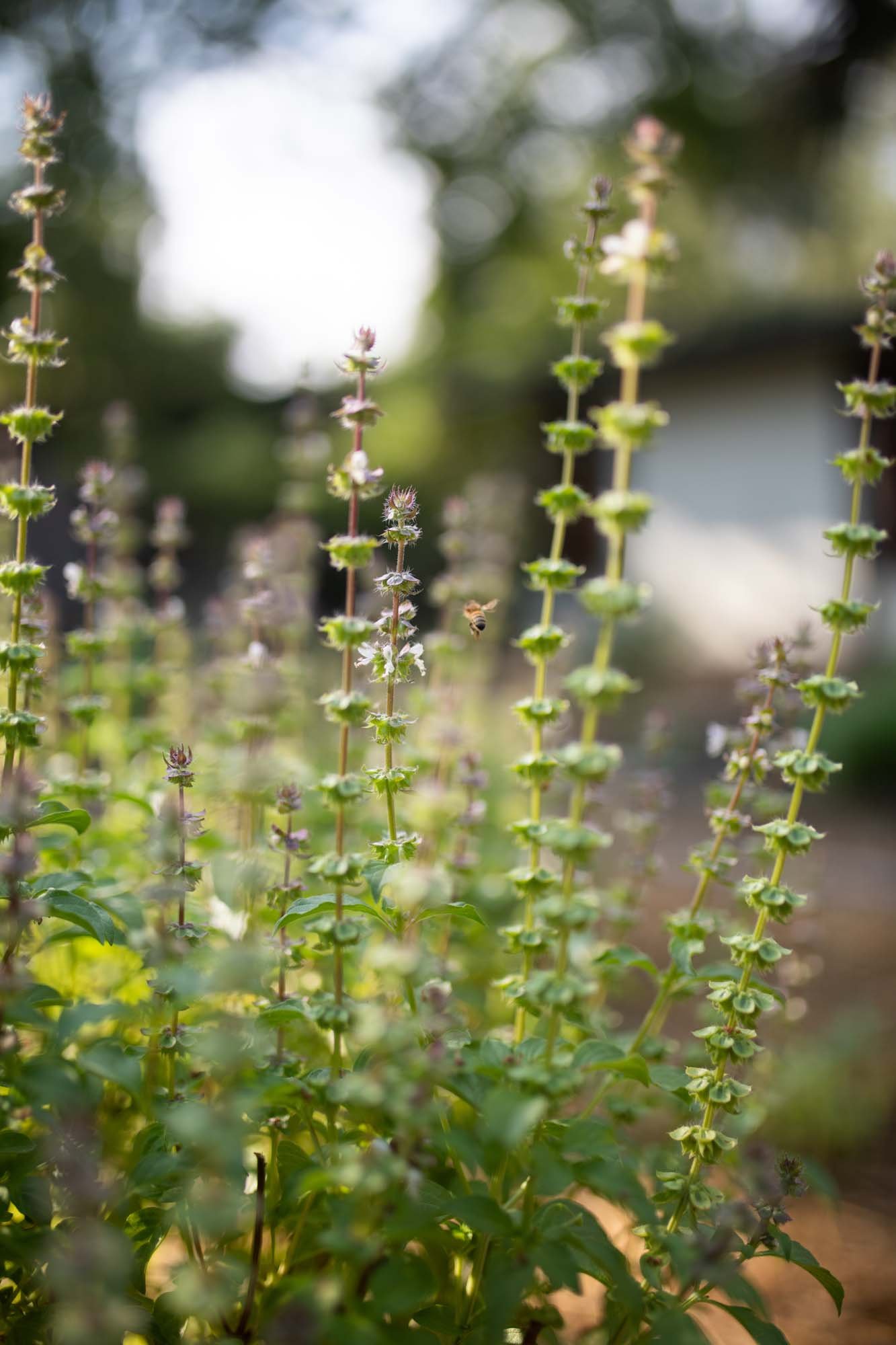
Tulsi is very easy to grow, and will also self-seed (profusely) if you let its flowery spikes dry out on the plant and scatter on the ground. Bees absolutely love and flock to its flowers, ensuring you always have tons of little pollinators buzzing around the garden. It also provides natural pest control, as its scent deters mosquitos, aphids, and whiteflies.
There are so many ways to use tulsi if you decide to grow it. Among my favorite uses are:
Adding fresh sprigs to my water (on its own or with other herbs like lemon balm and mint for a refreshing beverage)
Adding it to dried herbal tea blends
Mixing into fresh flower bouquets
Drying bouquets to hang around the house and garden as decoration
Homemade potpourri
Oxymel (tulsi is a great addition to oxymels for respiratory support)
And of course, tulsi also makes one of my favorite hydrosols, which is what we used it for at our fall equinox event.
Hydrosol is a water-based product made from the distillation of fresh herbs, flowers, or other plant materials. They are similar to essential oils (and are actually a byproduct of the oil-making process), but consist primarily of water, and have a softer, more subtle fragrance. They can be used as a gentle facial toner, sprayed onto the scalp for a quick refresh, or spritzed onto sheets or towels to add a pleasant aroma. I love keeping mine in the fridge and spraying it on my face for a cooling pick me up on hot summer days.
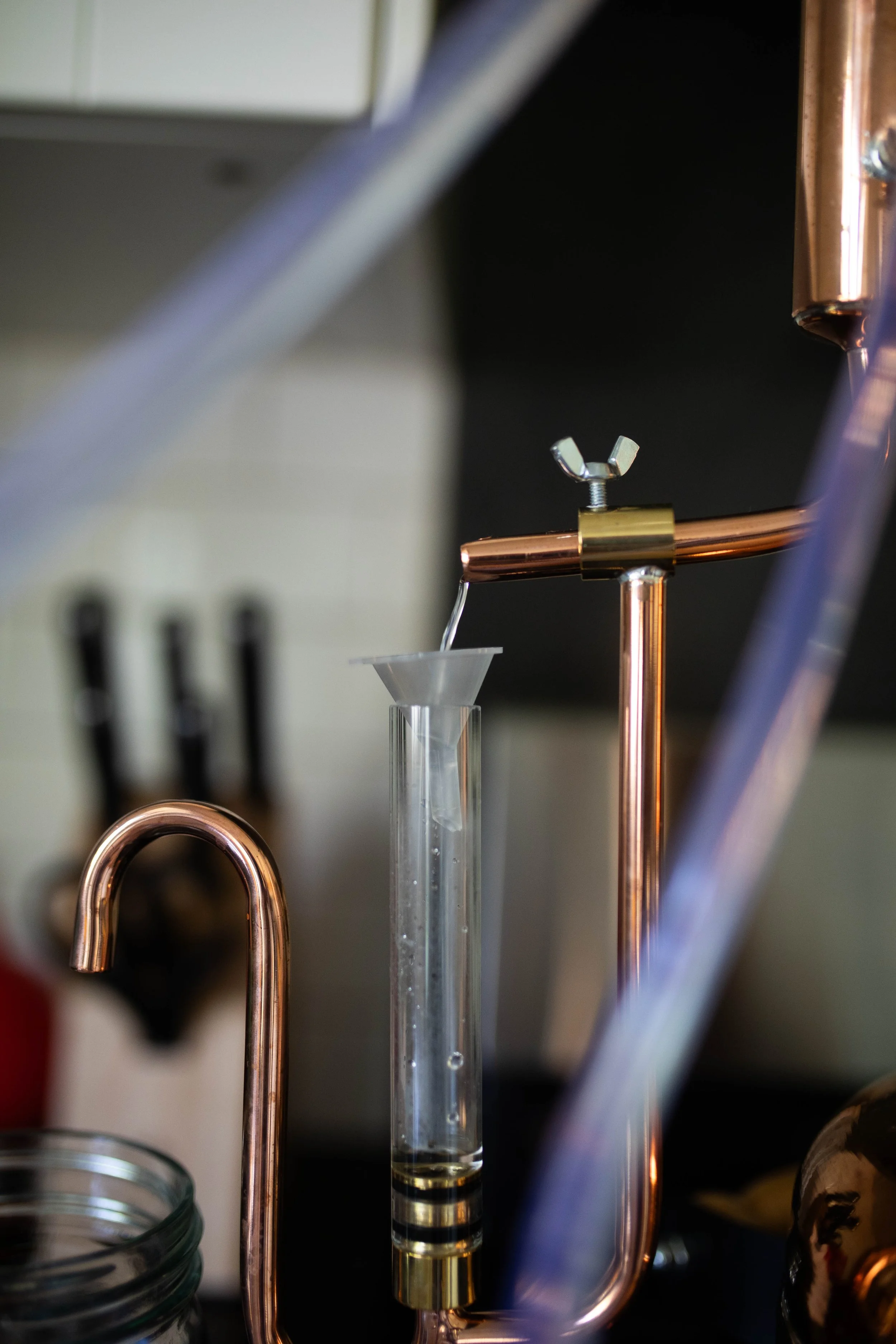
I love hydrosol so much, in fact, that I recently purchased my own copper still. I must admit that I got it in hopes of also making essential oils, but quickly learned that if you want to make a significant amount of essential oil, you need a VERY large still, and I got one of the smaller sizes. That said, it makes the hydrosol making process much easier, and gives you a superior product in terms of fragrance and shelf-life.
To see how the still works, you can check out some videos here.
Basically, making hydrosol consists of boiling water, which creates steam that heats your plant matter and releases its medicinal properties, creating condensation that is collected and bottled. If you don’t have a still to do the work for you, that’s okay! You can (and we previously did), make hydrosol with just a few supplies:
A pot
A heat-safe glass bowl
Plant matter
Water
Ice
That’s it!
Place your plant matter in the bottom of your pot and add enough liquid to just cover the plant matter. Bring to a boil, and then set to low heat. Put your glass bowl in the center of the bottom of the pot. Take the pot’s lid, turn it upside down, and place it on top of the pot. This will be your condensation collector. You can speed up the process by placing ice in the pot’s lid, which will cause an increase in condensation as the plant matter steams inside. Every so often, you will need to empty out the melted ice pool in the lid. This method will take a bit longer, but gradually your bowl inside the pot will fill up with fragrant hydrosol.
xx
Jules