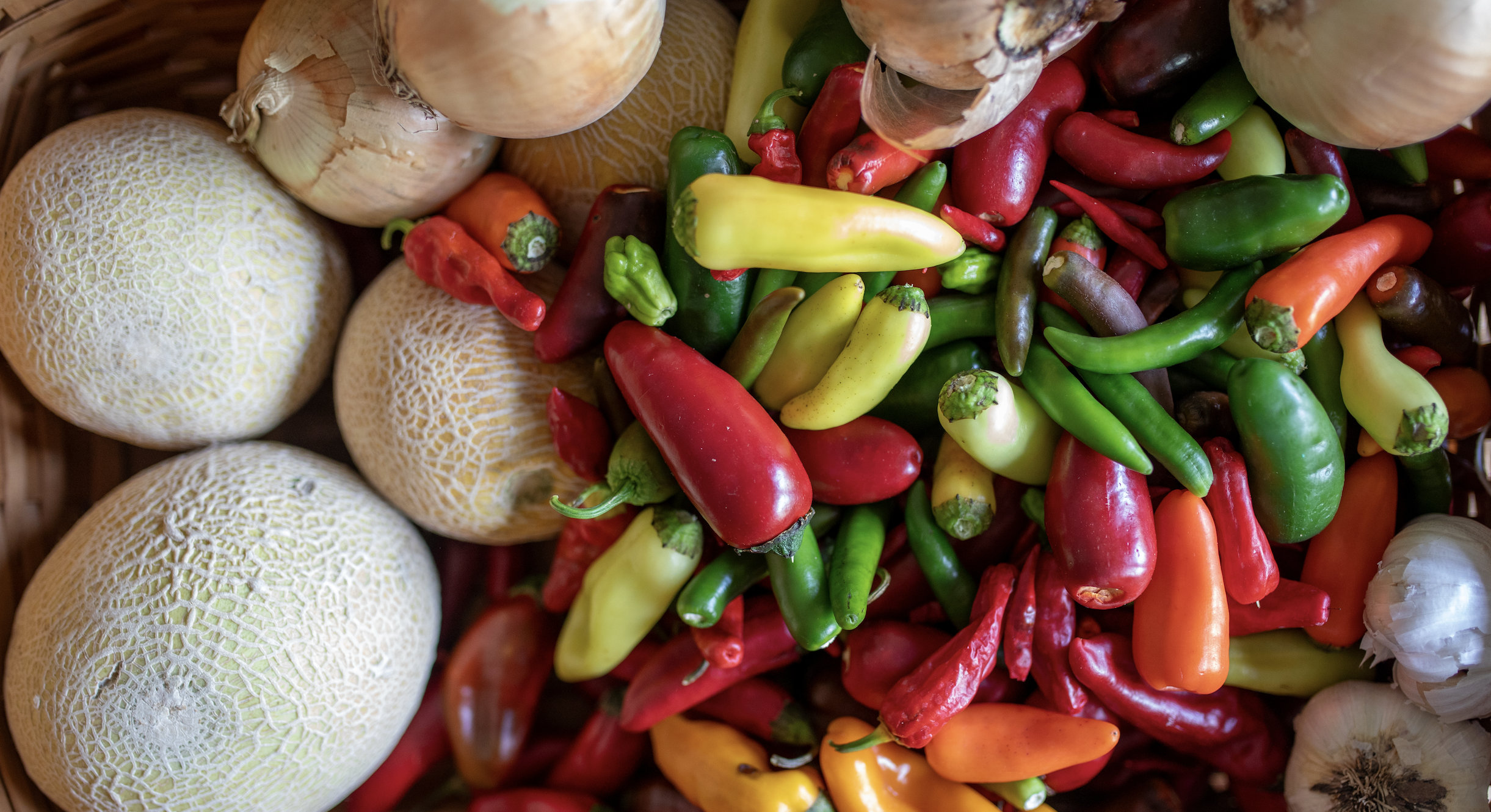
If you’re not a planner by nature, nature and gardening will inevitably make you one! A benefit if you lean into it, a curse if you don’t - if you don’t plant your hot peppers in March - May, you will not have them in July - September. Texas is still dusting off the final clutches of winter in early March (our frost dates hover between March 13-ish and March 20-ish). It always feels a bit out of place to be planting hot pepper seeds on chilly spring days, but I know that come July - September spicy salsas, zesty veggie stir fries, and tangy hot sauces will be so worth it. This year, I was gifted 3 Thai chili pepper seedlings from my dear friend Kathy. A side note on being friends with gardeners…expect to be gifted their seedling overflow sometime in March. Gardeners are a special kind of zealous folk, and we must pass some of that zeal on to our tribe - it’s how we show love.
So, I started my summer 2026 garden with 3 Thai chili peppers. Unexpectedly and of course, I ended up with 3 Thai chili peppers and 4 Aleppo peppers that self seeded from my summer 2025 garden leftovers. Plants are zealous folk, too ;). Last year, I bought Aleppo pepper seeds from Baker Creek Heirloom Seeds solely based on the seed catalog description: “has been used for centuries in traditional cooking and was a staple in ancient trade routes”. A plant that has withstood the test of time had to be in my garden! The 2025 crop made excellent hot sauce last year, so I was excited to see the 4 plants that seeded themselves in my 2026 garden. Peppers need daily watering to produce fruit, so between March and the fall equinox party I have been spending time watering these babies daily. Both the Thai chili and Aleppo peppers are ready to harvest as soon as the green pepper starts turning red, or they can be harvested when they’re still green for a milder heat profile. Once they’re harvested, they can be made into hot sauce immediately.
For the fall equinox party we utilized Deanna Talerico’s (Homestead and Chill) fermented hot sauce recipe. I’ve said it before and I’ll say it again - don’t stray from Deanna’s recipes! She’s tried and tested them a ton, and the product always turns out exactly as she describes. I love this recipe because it combines my love of hot sauce with a fermentation aspect. We have salt, spice, and gut health all in one condiment. How cool!
Goal: Fermented Hot Sauce
Materials: Mason Jar, fermentation weight, pickle pipes (or fermentation nipples/waterless airlocks), strainer, blender, pot to make salt brine, pickling salt, garlic, onions, hot peppers, cantaloupes (my addition for a little sweet), lime, and optional cilantro
How to: Warm water and pickling salt over medium high heat - enough to melt the salt into the water without boiling the water. Do this step first, and let the salt water brine cool to room temperature.
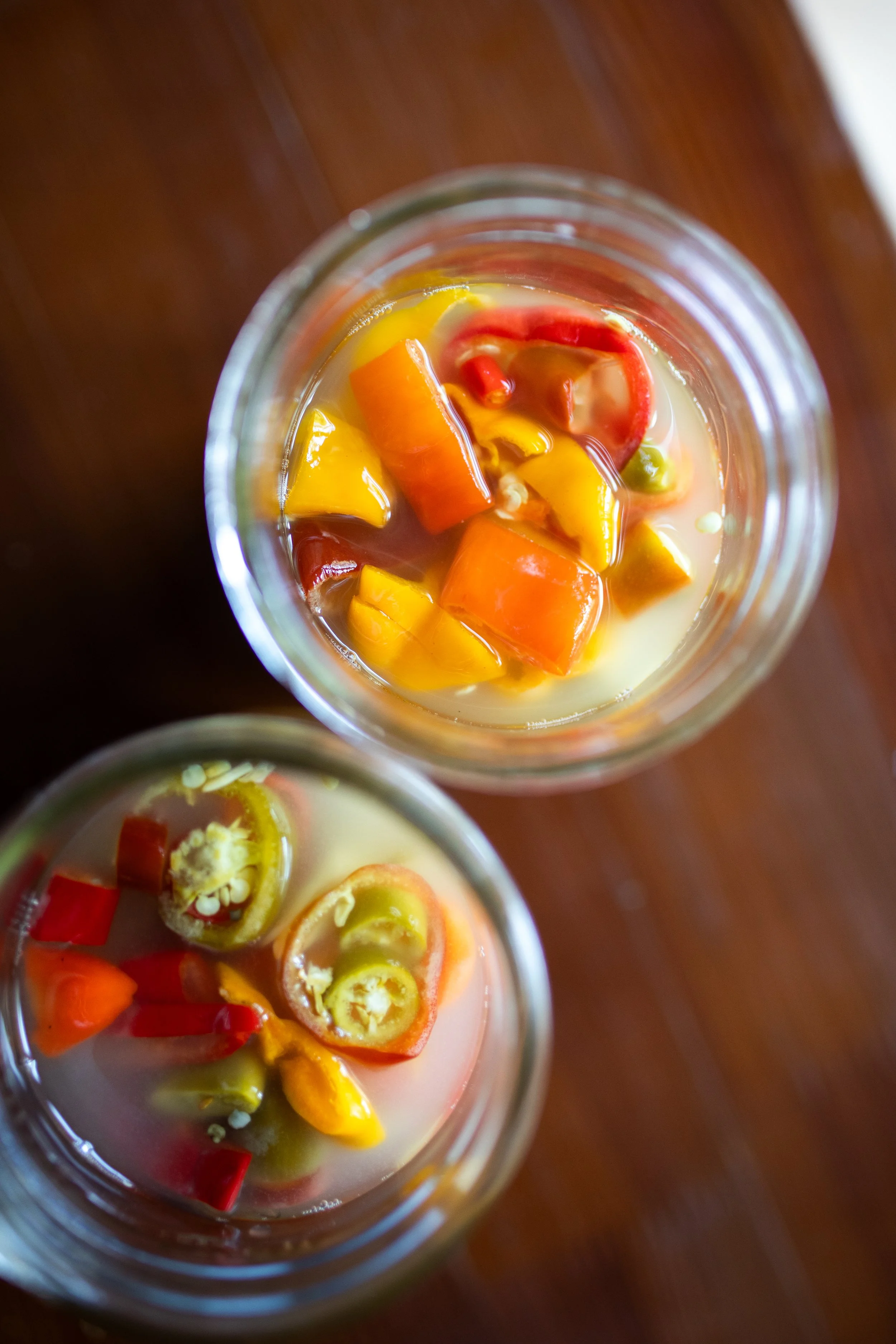
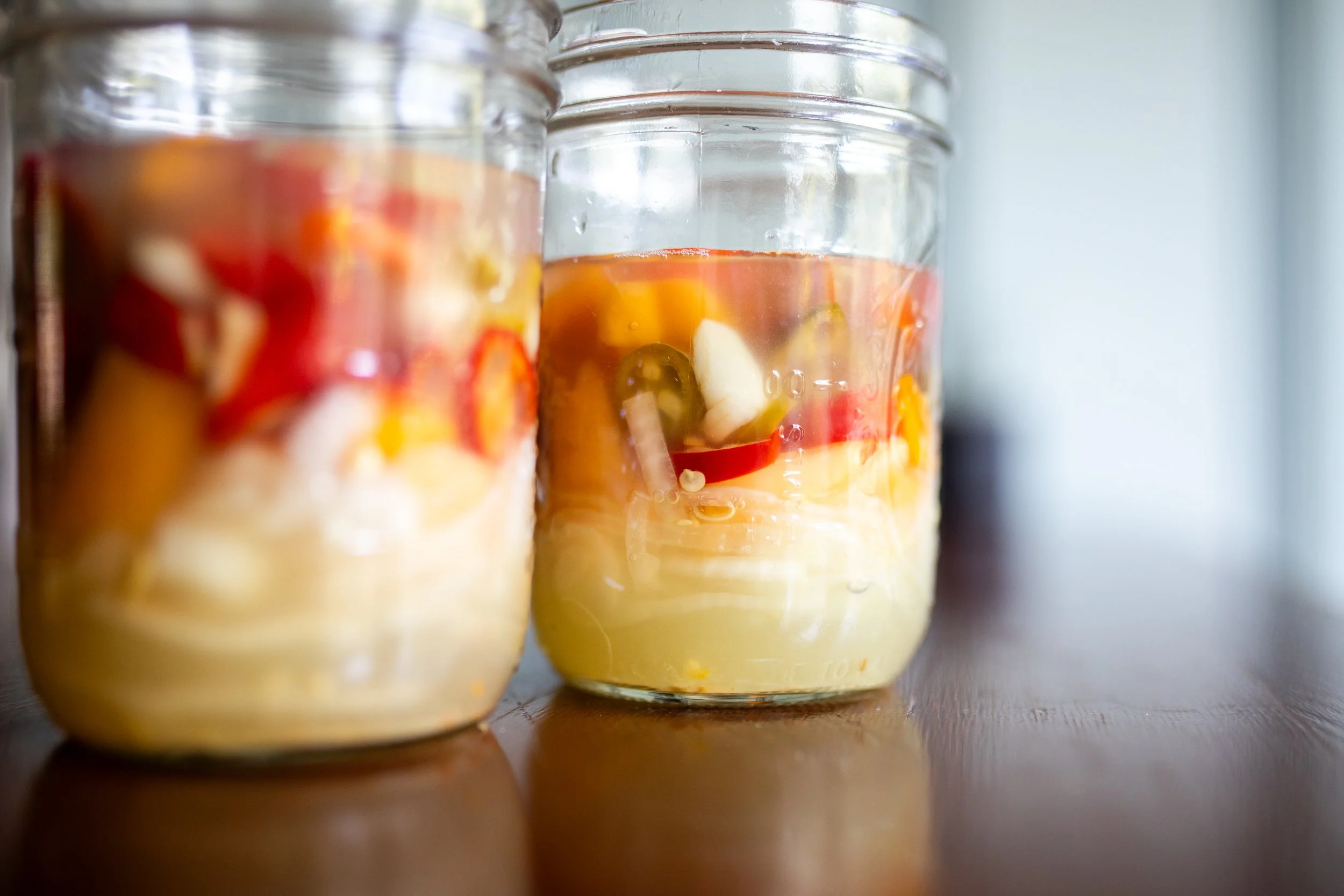
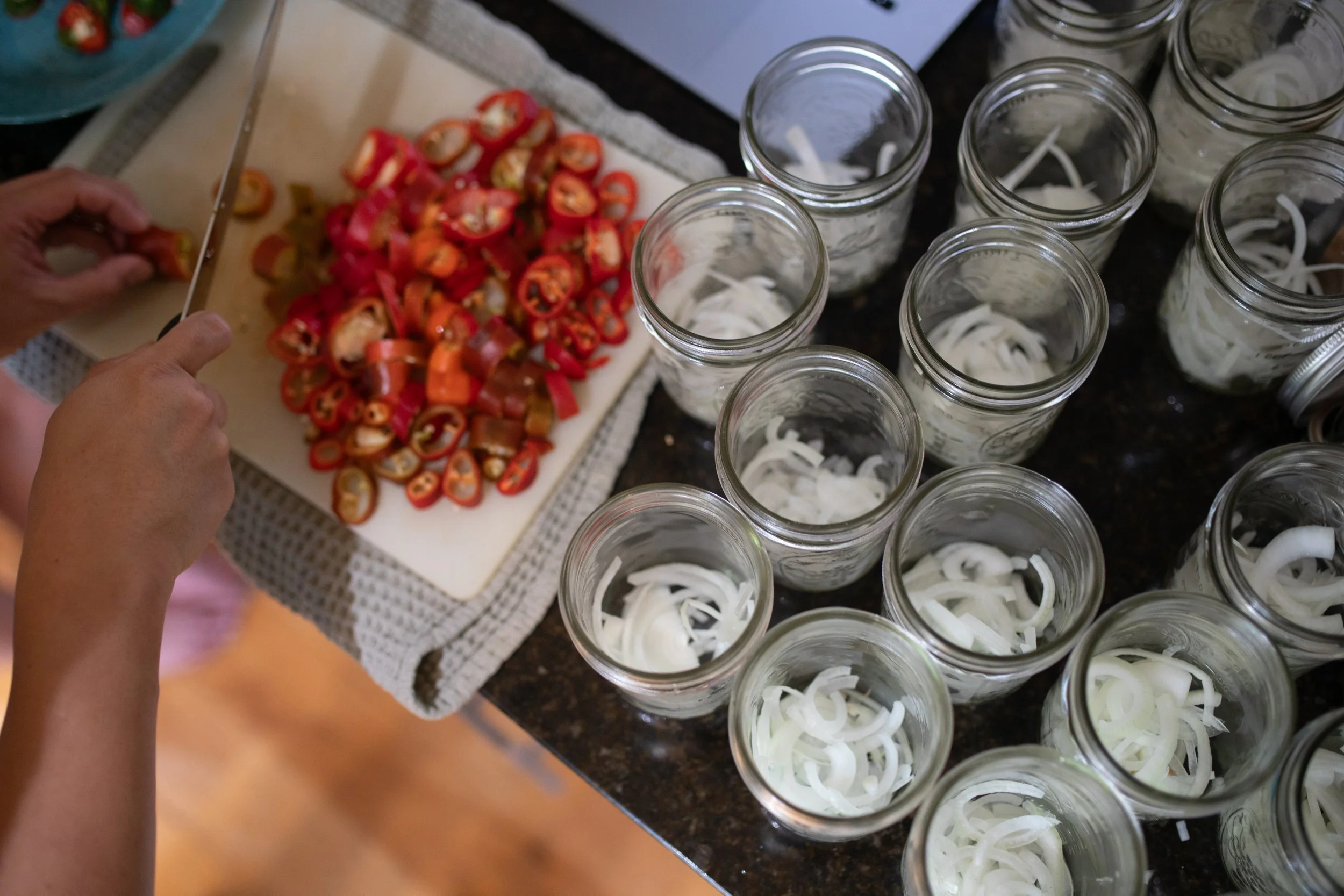
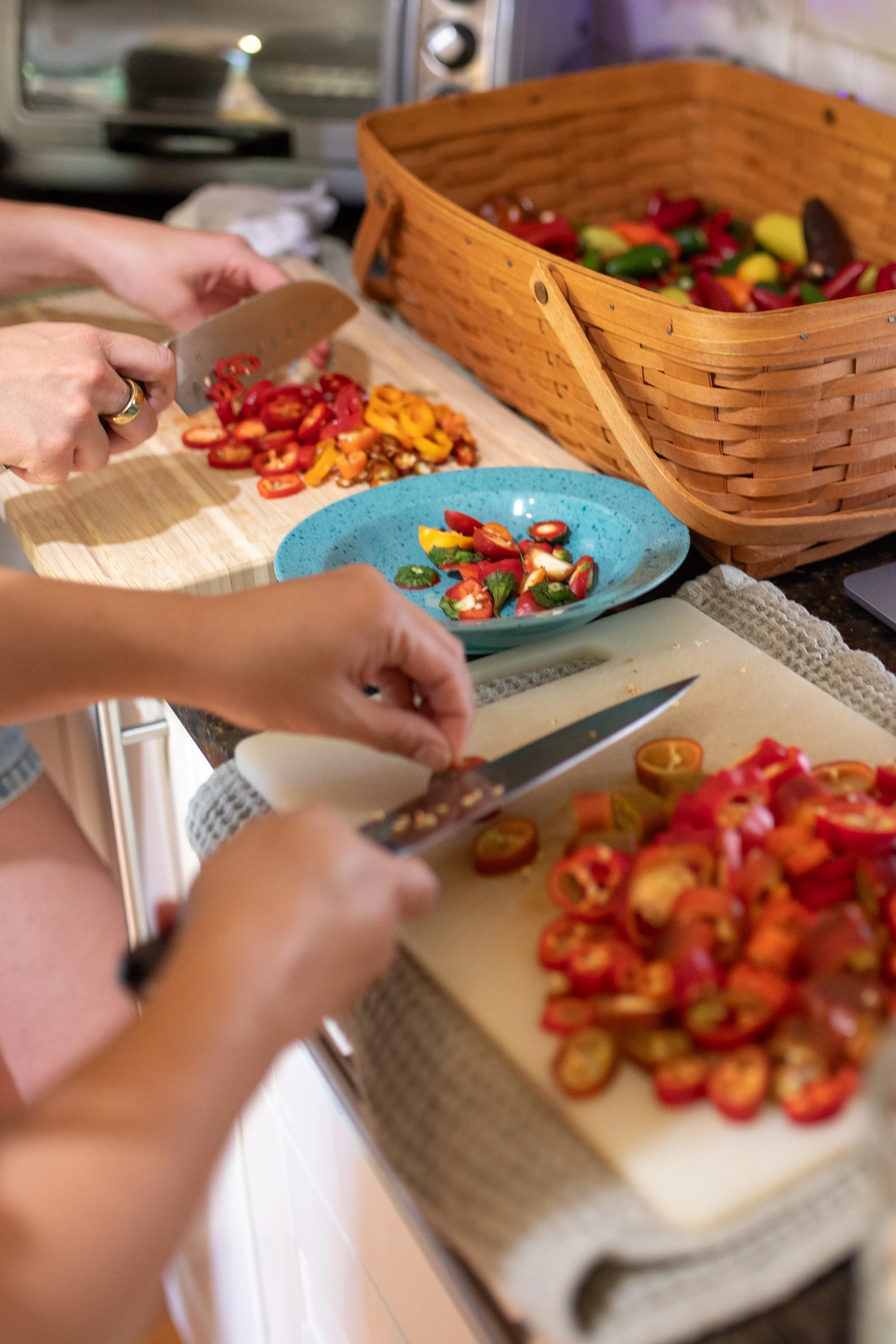
While the brine is cooling, evenly chop the cilantro, garlic, onions, hot peppers, and any other additional veggies or fruits like cantaloupes. Layer the contents in mason jars in the following order: cilantro, then garlic/onions, then hot peppers, then cantaloupes. Once the brine is cooled to room temperature, cover the bio mass in the mason jar with brine. Place the fermentation weight on top to squish down the bio mass - the purpose of the weight is to keep all bio mass submerged for the duration of the 7-14 day fermentation process. Cover the jar with the pickle pipe (*and seal with the metal mason jar ring) and let it sit in a climate controlled environment for 7-14 days (not in direct sunlight, at 68 to 73 degrees F). Too hot, and kahm yeast will form in the jar. This is safe to eat, but can create a funky smell and flavor. Too cold, and mold will grow. Just right, and you have a tasty, fermented hot sauce. The brine will turn cloudy during the fermentation process and this is lactobacillus doing its thing.
After 7-14 days, strain the contents of the jar, but save the brine! Blend all the bio mass from the jar with a small amount of the brine (exact ratios can be found on Deanna’s website here). Squeeze in fresh lime for the final blend, and now you have a yummy, spicy, gut-healthy hot sauce. The fermented sauce is good for up to a year if stored in the fridge.